Atolls and Blue Hole
Three coral atolls offshore Belize's barrier reef, including Lighthouse Reef and its circular sinkhole spanning 124 meters deep, accessible via day trip or liveaboard dive cruise.
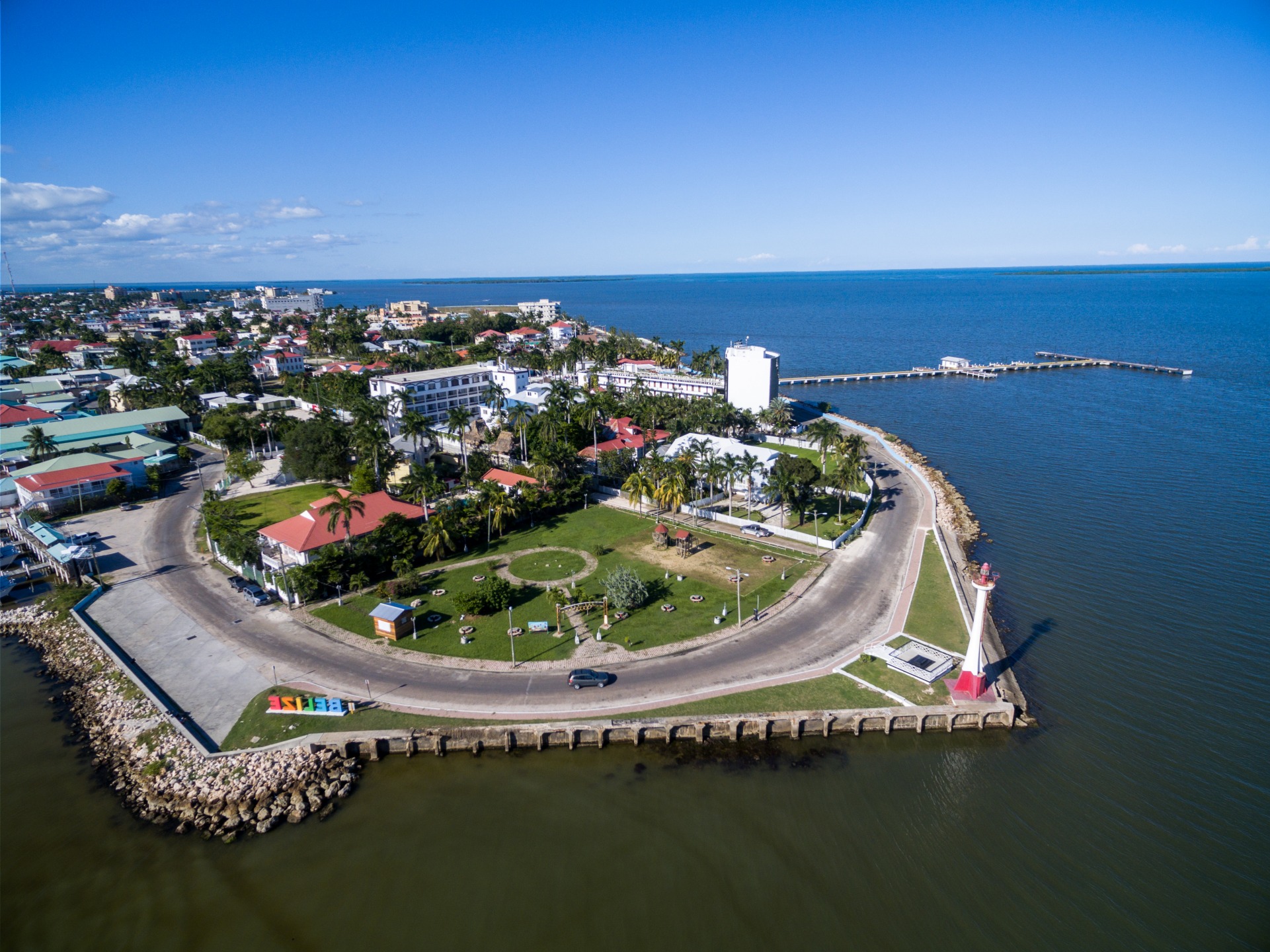
Offshore Belize's coral barrier reef, three coral atolls form a rare geological ensemble in the Caribbean: Turneffe, Lighthouse Reef, and Glover's Reef. Along with Mexico's Chinchorro, they are the only true atolls in the western hemisphere. They formed atop ancient limestone platforms, unlike the volcanic atolls of the Pacific, giving them shallow lagoons and remarkably complete reef crowns. From our agency in Belize City, we arrange access to these zones, situated 40 to 70 kilometers offshore, reachable only by speedboat or seaplane.
Turneffe is the largest and closest to shore, about two hours by boat from Belize City. Its interior lagoon, dotted with mangroves, shelters manatees and serves as a nursery for numerous fish species. It is also renowned for permit, tarpon, and bonefish fly fishing, practiced from the lodges of Blackbird Caye and Turneffe Flats. For divers, the sites at The Elbow, at the southern tip, drop steeply along the current.
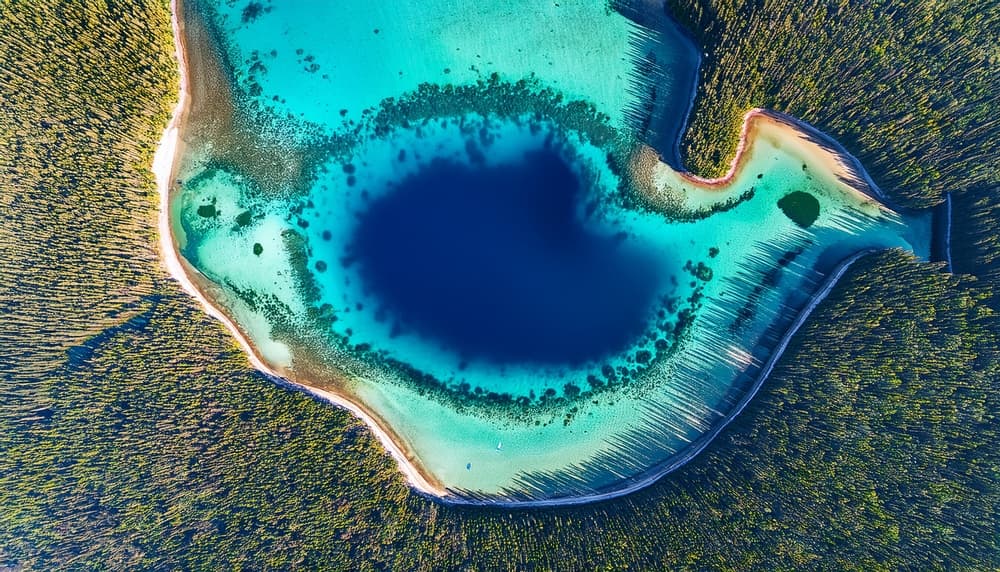
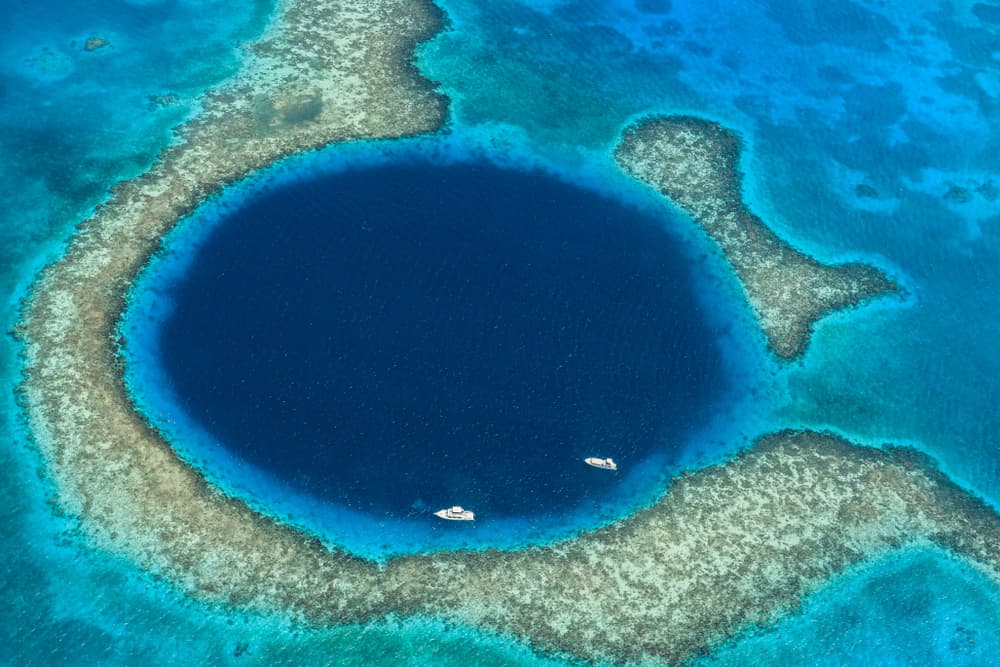
Lighthouse Reef to the east concentrates the most renowned sites. The Great Blue Hole, a circular sinkhole 300 meters in diameter and 124 meters deep, occupies the atoll's center. It is an ancient limestone cavern that collapsed at the end of the last glaciation, its stalactites now lying 30 to 40 meters below the surface. Diving here is demanding: rapid descent to 40 meters, brief bottom time, mandatory decompression stops. We reserve this dive for Advanced Open Water divers with at least 24 logged dives. For others, the site can be seen by seaplane from San Pedro—approximately one hour's flight—which actually reveals the sinkhole's geometry far better than diving does.
Also on Lighthouse Reef, Half Moon Caye is a protected islet since 1982, Belize's first designated nature reserve. Its colony of red-footed boobies, roughly 4,000 breeding pairs, nests in the ziricote trees at the island's center. A wooden boardwalk leads to an observation platform, a ten-minute walk from the anchorage. Long Caye, nearby, hosts a few lodges and a coral wall that drops vertically as soon as you leave the lagoon—the Long Caye Wall, one of the country's most fish-rich dive sites.
Glover's Reef, furthest south and most remote, has been a UNESCO World Heritage site since 1996, as part of Belize's entire reef system. Its 260 square-kilometer lagoon holds nearly 700 patch reefs, isolated reef plots where you can snorkel in 2 to 5 meters of water. This is where we send travelers wanting to combine diving with genuine disconnect: the few lodges on Long Caye, Southwest Caye, and Northeast Caye run on solar power, with no reliable connectivity.
Access is via day trip from Ambergris Caye or Caye Caulker (roughly 2.5 hours of boat time each way, full day), a liveaboard dive cruise of 3 to 7 nights from Belize City, or a fixed stay at one of the atoll lodges. Local operators based in San Pedro and Belize City employ captains and instructors often hailing from the coastal villages of Sarteneja and Hopkins. On-board and lodge cuisine centers on fresh fish (snapper, hogfish), conch in season from October to June, and coconut rice inherited from Creole and Garifuna heritage.
Must-See
Great Blue Hole dive. Descent to 40 meters into Lighthouse Reef's limestone sinkhole, past stalactites dating to the last glaciation. A technical dive reserved for confirmed Advanced level divers, best complemented by a seaplane overflight from San Pedro.
Red-footed booby colony at Half Moon Caye. Approximately 4,000 breeding pairs nest in the ziricote trees of this islet, a nature reserve since 1982. Observation platform accessible by foot from the anchorage, ten minutes from the landing.
Snorkeling Glover's Reef's patch reefs. The lagoon holds nearly 700 isolated reefs in 2 to 5 meters of water, navigable by kayak from Long Caye or Southwest Caye lodges. Visibility frequently exceeds 25 meters.
Fly fishing in Turneffe Lagoon. The sandy flats around Blackbird Caye are among the world's rare spots where you can pursue the grand slam—permit, tarpon, and bonefish—in a single day. Prime season April through October.
Long Caye Wall drop. Coral wall beginning at 12 meters and descending beyond 800 meters, at Lighthouse Reef lagoon's edge. Frequent encounters with giant groupers, reef sharks, and eagle rays.
When to Go
The dry season, late November through May, is ideal for the atolls. Trade winds calm from February onward, underwater visibility regularly reaches 30 meters, and air temperatures range between 24 and 29°C, water temperatures between 26 and 28°C. March through June offers the best surface conditions for long speedboat crossings, especially to Glover's Reef. Whale sharks are spotted at Gladden Spit, south of the barrier, around the full moons of April through June.
June through November, the wet season brings short but intense tropical showers, especially in June and October. Hurricane season stretches August through mid-November: liveaboard cruises are often canceled or rerouted. September and October are months we firmly advise against for the atolls. Conversely, July and August, outside of major storms, offer 29°C waters and good diving conditions with fewer crowds on the sites.
Practical Advice
We recommend a minimum of 3 days for serious atoll exploration, ideally 5 to 7 days if your goal is diving all three (Turneffe, Lighthouse, Glover's). Day trips from Ambergris or Caye Caulker can reach the Blue Hole and Half Moon Caye in a long day (5:30 a.m. departure, 5:30 p.m. return), but Glover's Reef's finest sites are accessible only with an overnight stay. Seven-night liveaboard cruises from Belize City remain the most comprehensive option for experienced divers. Philip Goldson International Airport, near Belize City, is the logical entry point, with seaplane or speedboat transfers afterward.
The region pairs naturally with the Cayes and coral barrier, whose underwater logic it extends, and with Cayo and the west to alternate diving and jungle interior. Comfort levels vary widely by lodge: from rustic bungalows on Long Caye (Glover's) to well-appointed lodges with restaurants and spas at Turneffe Flats. This destination suits certified divers, sport fishers, couples seeking maritime isolation, and naturalists interested in birdlife and coral ecosystems. It is less suited to families with young children due to boat times and distance from medical facilities.