Cayes and Coral Reef
Around a hundred sand and mangrove islands set along the world's second-largest coral reef, between lively San Pedro and electricity-free Tobacco Caye.
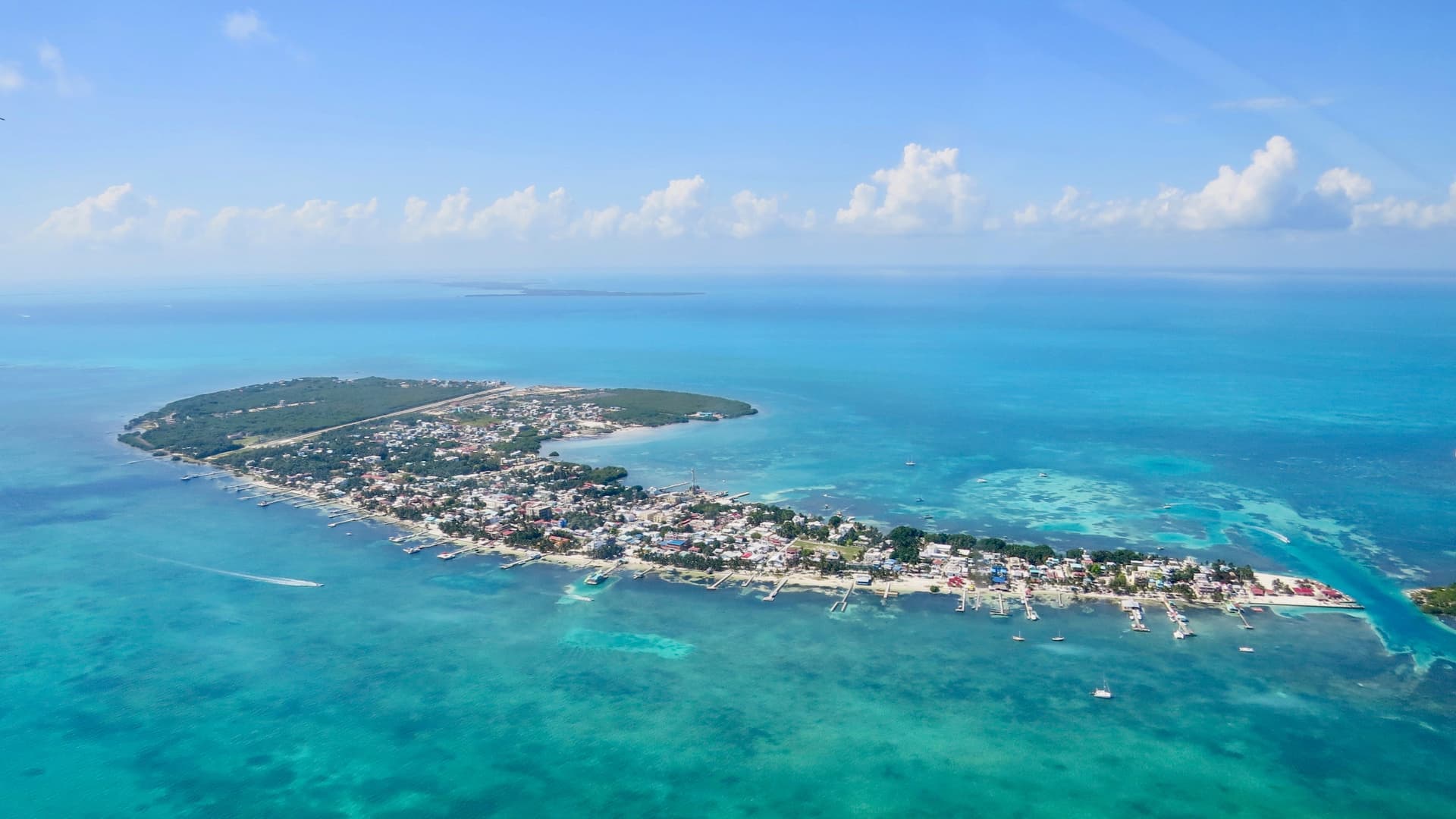
Belize's cayes are around a hundred islands of sand, red mangrove, and coconut palms, strung along 300 kilometers of the Mesoamerican Barrier Reef, the world's second-largest coral system after Australia's Great Barrier Reef. From a plane departing Belize City, the water changes color from the opaque turquoise of the inner lagoons to the deep blue of the shelf edge, separated by a continuous line of white foam. This underwater boundary is where most of our guiding work concentrates along the coast.
Caye Caulker, 35 minutes by water taxi from Belize City, is our most requested base for travelers seeking to slow down. The island stretches 8 kilometers long, cars are banned, and you move around on foot, by bike, or golf cart. The Split—the channel carved open by Hurricane Hattie in 1961—separates the inhabited village from the northern mangrove. The local motto "Go Slow" is painted everywhere, on colorful wooden facades and fishing boats alike. By evening, the pangas return with conch, Caribbean spiny lobster (in season from June 15 to February 14), and snapper that will be grilled in beachfront palapa restaurants.
Ambergris Caye, further north, is the country's largest island, stretching 40 kilometers. San Pedro, its only town, blends descendants of mestizos from the Yucatán who arrived in the 19th century, Belizean Creoles, and North American expats. The center still has sandy streets, but the marina, hotels, and Front Street restaurants create a livelier nightlife than Caye Caulker. From San Pedro, trips depart to Hol Chan Marine Reserve, a 9-meter-deep channel in the reef, and to Shark Ray Alley, where nurse sharks and stingrays gather—a tradition that began when fishermen used to clean their catch there.
Further south, across from Dangriga and Hopkins, the atmosphere shifts. Tobacco Caye measures 200 meters long, with a dozen wooden cabanas placed directly on the sand and no 24-hour electricity on some structures; the reef begins just 50 meters from shore. South Water Caye, 14 nautical miles from Dangriga, sits within a marine reserve designated UNESCO World Heritage status in 1996 along with the rest of Belize's reef system. These southern cayes attract travelers who want to fall asleep to the sound of waves, without bars or shops, and snorkel directly from the beach.
The cayes' economy rests on three pillars: artisanal fishing (conch, lobster, snapper, grouper), dive and snorkeling tourism, and over the past fifteen years, coastal real estate development that weighs most heavily on Ambergris. Fishing cooperatives on Caye Caulker and San Pedro manage their quotas with the fisheries department, and marine guides must now be licensed to enter reserves like Hol Chan, Caye Caulker Marine Reserve, or South Water Caye. We work with these local guides—Belizean men born on the islands—who know the passages, currents, and green turtle spawning zones.
To Discover
Snorkeling at Hol Chan and Shark Ray Alley. Half-day trip from San Pedro or Caye Caulker, water at 28°C, stingrays and nurse sharks at 3 meters depth, followed by a pass through the coral gardens at Coral Garden.
The Split at Caye Caulker in late afternoon. This 30-meter-wide channel created by Hurricane Hattie has become the island's gathering spot—swim in the current, grab a Belikin at Lazy Lizard, and walk back through sandy streets at sunset.
Night at Tobacco Caye, cabin on stilts. Five family-run lodges share this 2-hectare islet, with meals based on the day's catch, snorkeling from the dock, and a headlamp required after 10 p.m. when the generator shuts down.
Conch fishing with a San Pedro cooperative. Full-day outing with a licensed fisherman, October to June season, to understand stock management and prepare fresh ceviche upon return at the beach.
Kayaking in the mangrove of northern Caye Caulker. Beyond the Split, the island's north remains wild—occasional manatees in interior channels, herons and frigatebirds in the red mangroves.
When to Go
The best time for the cayes runs from late November to mid-April: steady northeast trade winds of 15 to 25 knots, air temperatures between 24 and 29°C, water at 26-27°C, and underwater visibility of 20 to 30 meters. This is peak tourist season, especially around Christmas, New Year's, and Holy Week, when we recommend booking accommodations 4 to 6 months in advance, particularly on Ambergris.
From June to November, the rainy season brings short but intense showers, especially in September and October, which are also statistically the months most exposed to tropical storms. Water temperature rises to 29-30°C, pleasant but visibility can drop to 10 meters after storms. May and June remain a good window in between: fewer crowds, softer prices, calmer seas, and whale shark season in the south near Gladden Spit (April to June, around full moons).
Practical Tips
We recommend 4 to 6 nights on the cayes to avoid chaining transfers. Three nights suffice if you stay on a single island, but losing half a day to water taxi between two islands for 48 hours makes little sense. The logistics entry point is Philip Goldson International Airport in Belize City, where water taxis depart (1 hour to Caye Caulker, 1.5 hours to San Pedro) and flights on Tropic Air or Maya Island Air (15 to 20 minutes). For the southern cayes, you pass through Dangriga, accessible by domestic flight or by road from Belmopan in 2.5 hours.
The cayes combine naturally with Cayo and the west for a sea-and-jungle contrast, counting roughly 3 hours of driving between San Ignacio and Belize City. For certified divers, extending to the Atolls and the Blue Hole is done from Ambergris Caye as a full-day excursion, or better yet as a 2 to 3-night live-aboard cruise. The north and Lamanai connect easily at the start or end of your stay from Belize City. Comfort ranges from rustic cabanas on Tobacco Caye to beachfront resorts on Ambergris: we adapt based on whether you're traveling as a family with children (Ambergris for amenities), as a contemplative couple (South Water Caye), or as independent travelers (Caye Caulker).