Great Blue Hole
Great Blue Hole
A perfectly circular submarine sinkhole 300 metres in diameter at the heart of Lighthouse Reef atoll, the Great Blue Hole stands as one of the world's most renowned dive sites, recognised by UNESCO.
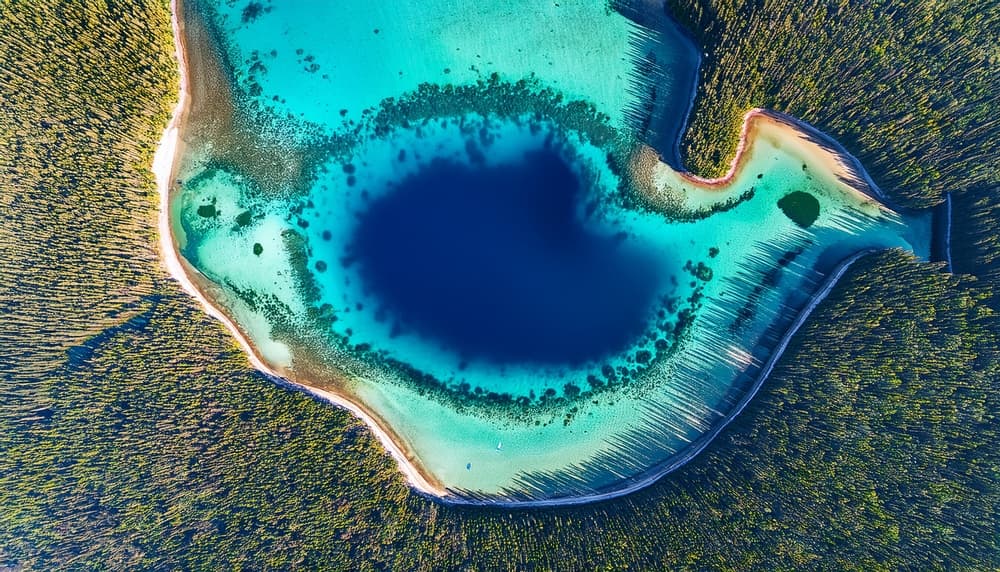
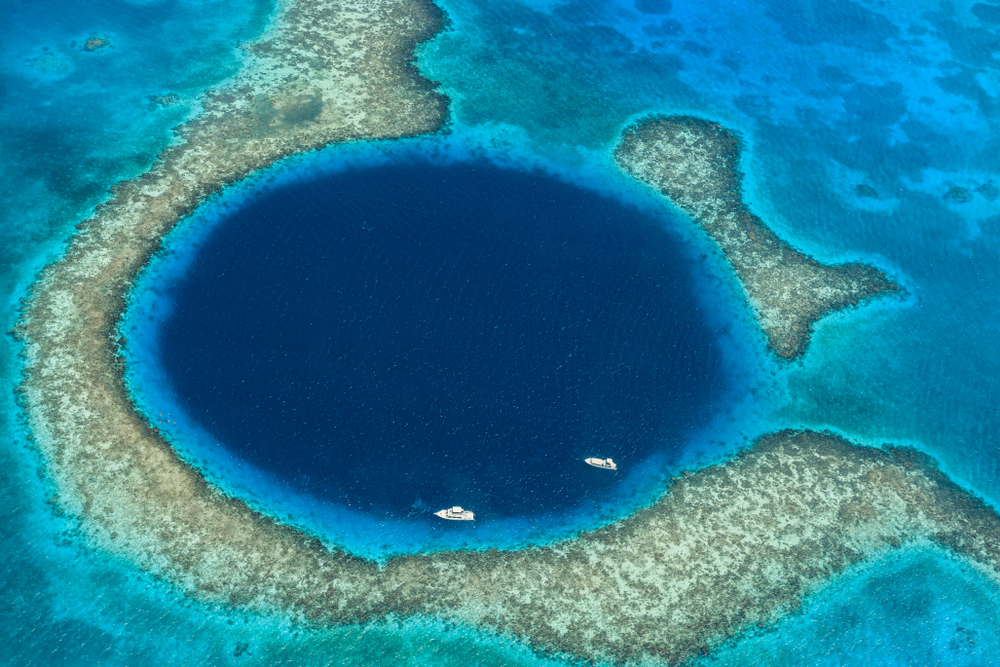
Off the coast of Belize, at the centre of Lighthouse Reef atoll, the Great Blue Hole is a circular submarine sinkhole approximately 300 metres in diameter and 125 metres deep. Listed as a UNESCO World Heritage site under the Belize Barrier Reef Reserve System, it draws divers from around the globe to explore its submerged stalactites and deep-water sharks. The surface gleams in intense cobalt blue, a striking contrast against the turquoise lagoon surrounding it.
Quick Facts
- Access: Only by boat from Belize City, Caye Caulker or Ambergris Caye — journey takes several hours depending on departure point.
- Required level: Scuba diving reserved for certified divers (advanced level recommended; maximum depth ~40 m for stalactite zones).
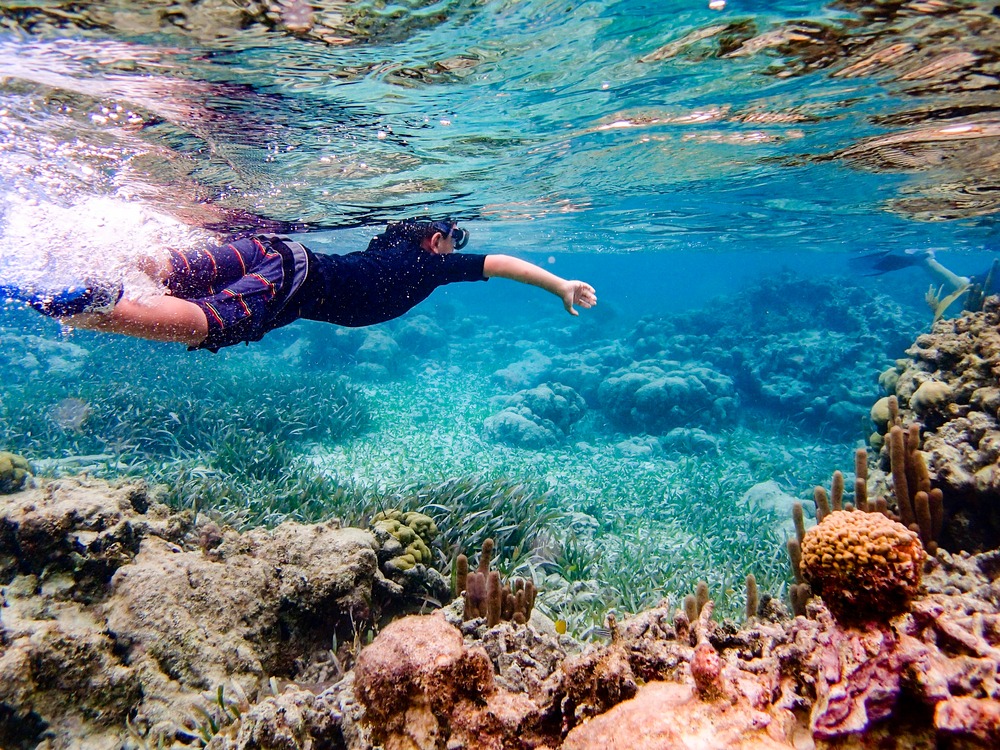
- Snorkelling: Possible at the surface, though the site's main features are best experienced underwater.
- Recommended duration: A full day (early morning departure, late afternoon return).
- Season: Accessible year-round; calmest waters April to June.
What You'll See
The sinkhole's inner walls reveal stalactites and stalagmites formed over 10,000 years ago, when the cavern was above sea level. At depths of 30 to 40 metres, visibility is exceptional and light filters down in ethereal columns. Caribbean reef sharks, nurse sharks and occasionally bull sharks inhabit the deeper waters. Above the surface, the chromatic contrast between the hole's dark blue and the surrounding turquoise lagoon is breathtaking—particularly striking when viewed from the air.
History and Context
The site gained global recognition in 1971 when Jacques-Yves Cousteau led an expedition aboard the Calypso and declared it one of the world's finest dive destinations. Geologically, it is a drowned karst formation—an ancient limestone cave that collapsed as sea levels rose at the end of the last ice age. UNESCO inscribed the entire Belize Barrier Reef system, including Lighthouse Reef, as a World Heritage site in 1996.
Highlights of Your Visit
Diving into the Sinkhole
The descent along the vertical wall exposes massive stalactites, some exceeding six metres in length. The absence of currents within the sinkhole creates a technically accessible dive for advanced divers. While marine life is less abundant here than on exposed reefs, the geological spectacle more than compensates.
Encountering Sharks
Caribbean reef sharks are regularly spotted in mid-water. Many dive excursions include a stop on the outer reef of Lighthouse Reef, which teems with tropical fish and coral formations.
The Aerial Perspective
Flights in light aircraft or helicopters departing from Belize City reveal the sinkhole's perfectly circular form and striking colour gradations. This vantage point delivers the site's most iconic photography.
Photography Tips
Underwater, a waterproof camera with a wide-angle lens best captures the stalactites and the wall's depth. At the surface, morning light creates a glancing angle that accentuates the cobalt-to-turquoise contrast. From a plane or drone (check local regulations), the circular geometry is most dramatic. Avoid direct flash on corals.
Location and Access
The Great Blue Hole lies roughly 70 kilometres east of Belize City within Lighthouse Reef atoll. Access is exclusively by sea or air. Most dive operators based in Ambergris Caye or Caye Caulker offer full-day excursions. Light aircraft flights from Belize City allow for an overflight before or after diving. The site is not accessible to people with reduced mobility due to the maritime nature of access.
Nearby Attractions
- Half Moon Caye — nature reserve at the southern tip of Lighthouse Reef, home to magnificent frigatebirds and red-footed boobies.
- Ambergris Caye — Belize's premier island destination and frequent departure point for blue hole excursions.
- Caye Caulker — a more laid-back island, also serving as a base for dive operations.
- Belize Barrier Reef — the world's second-largest coral reef system, UNESCO-listed, framing the entire coastline.
Frequently asked questions
To dive into the sinkhole and see the stalactites, a diving certification is essential. Advanced level is recommended, as points of interest lie between 30 and 40 metres. Snorkelling at the surface remains possible but offers only views of the site's exterior.
The site is accessible year-round. Waters are generally calmest from April to June, before the rainy season. The dry season (November to April) is also excellent, with good visibility and higher visitor numbers.
Most excursions depart from Ambergris Caye or Caye Caulker. Departures from Belize City are also available. Boat journeys are lengthy; plan for a full day.
Caribbean reef sharks and nurse sharks are regularly observed. Incidents are extremely rare. Local dive guides are familiar with local marine behaviour and supervise groups accordingly.
Yes. Light aircraft flights from Belize City allow you to admire the circular form and colours from above. This is an excellent alternative for non-divers.
Yes. The Great Blue Hole is part of the Belize Barrier Reef Reserve System, inscribed as a UNESCO World Heritage site in 1996. Fishing and unauthorised anchoring are prohibited.
Interested in this visit?
We can include it in your personalised itinerary.