The Archaeological Site of Yaxha
The Archaeological Site of Yaxha
Maya city bordered by the Yaxhá and Sacnab lagoons, 73 km from Flores. Temple-pyramids, astronomical observatories and views of Topoxte from Temple 216.
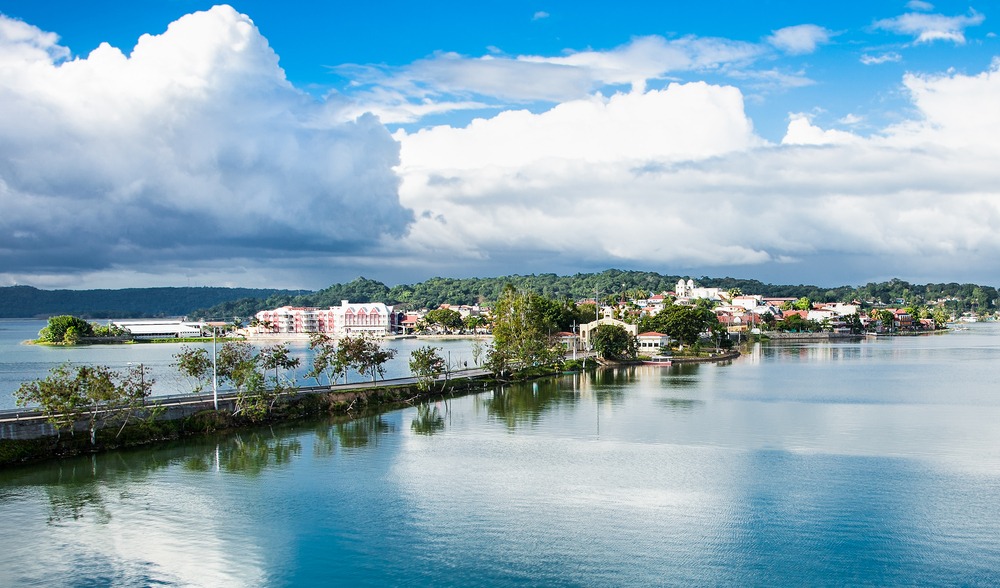
Bordered by the Yaxhá and Sacnab lagoons, the archaeological site of Yaxha is an ancient Maya city located in the Petén department of Guatemala, approximately thirty kilometers southeast of Tikal. Although this profile is linked to a circuit including neighboring Belize, Yaxha is visited from the Guatemalan side, from the town of Flores. Its name means "green water" in the Maya language, referring to the lake that borders it.
Why Visit Yaxha
Yaxha ranks among the major Maya sites of Petén, yet attracts far fewer visitors than Tikal. Visitors move freely among temple-pyramids, ball courts and acropolises, within a jungle designated a Maya Biosphere Reserve. The site combines archaeological interest with wildlife observation (howler monkeys, toucans, occasionally snakes), with a vantage point from the summit of Temple 216 overlooking the lagoon and the island of Topoxte.
History of the Site
The first occupation of Yaxha dates back to the 6th century BCE. The city reached its peak around 800 CE, when its population reached approximately 20,000 inhabitants. Unlike many other Maya sites, its modern name corresponds to the one used by its inhabitants during the Classic period: the city's emblem glyph reads "Yaxhá" (Yax: blue-green, ha: water).
Yaxha maintained close dynastic ties with Naranjo, its neighbor to the northeast, alternating between alliances and conflicts whose record is preserved on stelae. Mentioned by Villagutiere de Sotomayor in Spanish sources in the early 17th century, the city subsequently fell into obscurity. In 1904, German architect and military officer Teobert Maler traced its path and contributed to its redocumentation. More recently, Yaxha gained prominence by serving as a setting for the American reality television show Survivor in 2005. Today it is one of Guatemala's largest archaeological sites.
What to See On Site
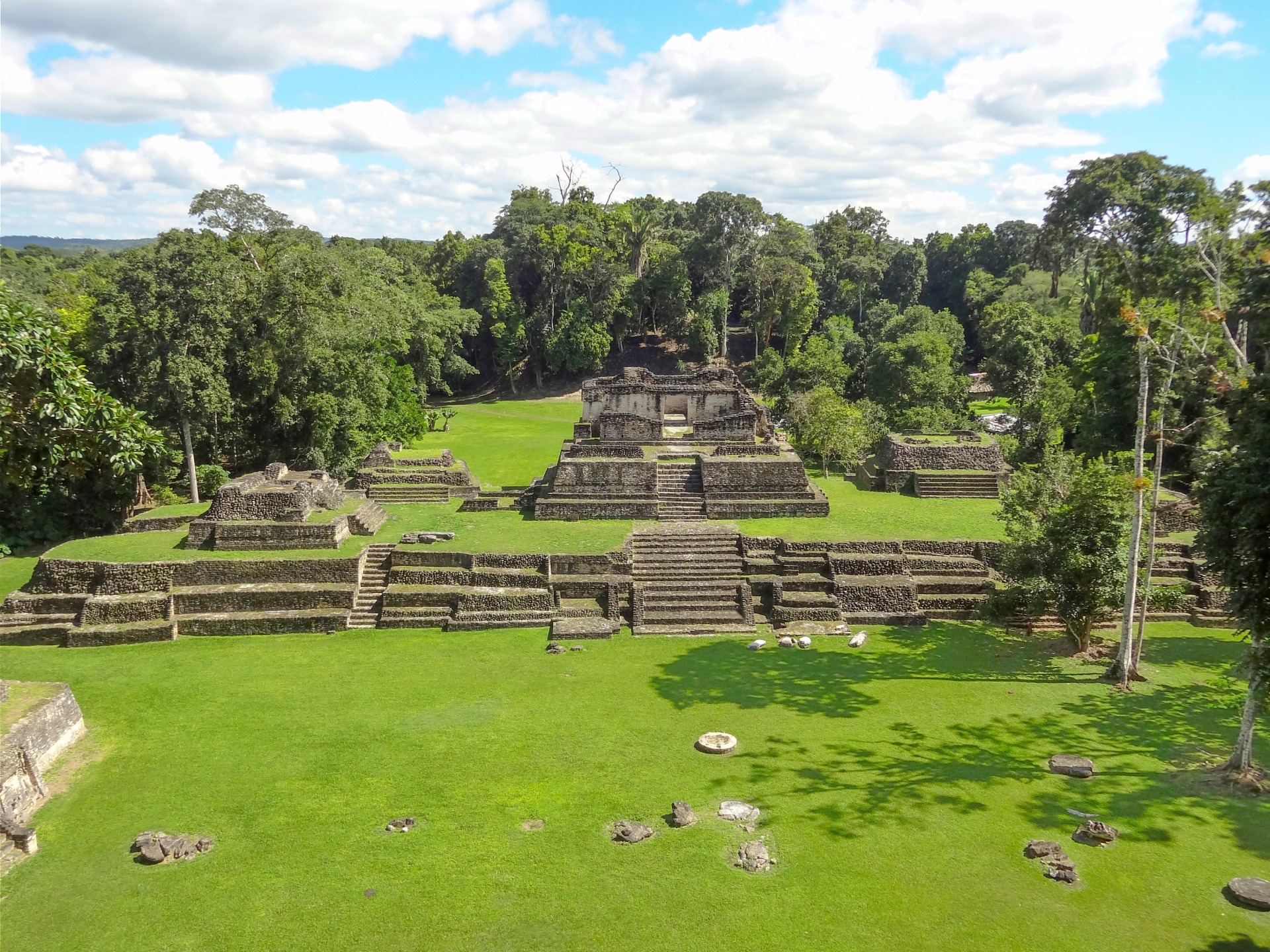
The site comprises several hundred structures spread across a vast plateau bordering the lagoon. Classic Maya architectural style dominates, with characteristic elements:
- Two ball courts, carved stelae and altars scattered among the monumental groups;
- Sacbeob, those white stone causeways that connected the complexes to each other and descended toward the lake;
- The Maler Pyramid Complex, one of the most prized ensembles, partially restored;
- Several acropolises, including the North and East Acropolises.
The Astronomical Observatories
Yaxha preserves two complexes called the Major Astronomical and Minor Astronomical, whose buildings are aligned with the solstices and equinoxes. These ensembles were used to track the solar cycle and establish the Maya ritual calendar.
Temple 216
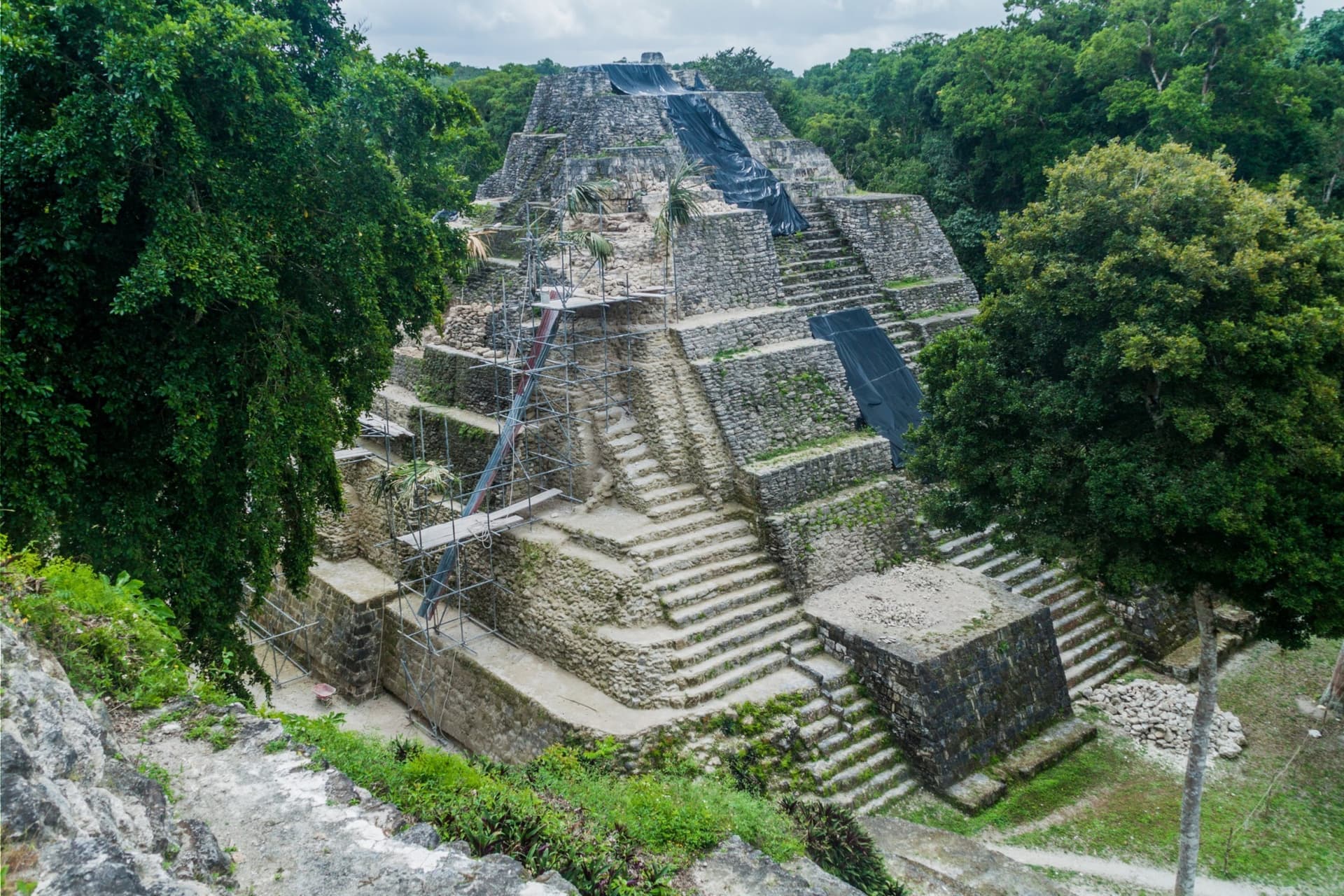
The highest structure in the city, Temple 216, located on the East Acropolis, is climbed via a wooden staircase. Its summit opens onto an unobstructed view of the canopy, Yaxhá lagoon and the island of Topoxte. It is typically chosen as the endpoint of the visit, in late afternoon light.
Topoxte
Located on an island in Yaxhá lagoon, accessible by boat, Topoxte is the largest Post-Classic site in Petén. Later than Yaxha, it complements it well for understanding the continuity of Maya occupation in the region.
Practical Information
Yaxha is located within a closed national park. The ticket is purchased at the park entrance, before the final track section leading to the ruins. It is also valid for the neighboring sites of Nakum and Naranjo, which justifies spending more than one day for visitors interested in Maya archaeology. Allow approximately half a day for the main Yaxha visit, longer if you include Topoxte by boat.
Sturdy shoes, water, insect repellent and a headlamp (for wooden stairs) are recommended. Walking between monumental groups can represent several cumulative kilometers.
When to Go
The dry season, from November to April, remains the most comfortable period: trails are passable, ruins less humid, wildlife observation is facilitated. The rainy season (May-October) makes the access track more difficult but offers greener jungle and fewer crowds.
How to Get There
Yaxha is reached from Flores, approximately 73 km away, which is approximately 1.5 hours of driving including a final section of unpaved track. Three main options:
- Organized excursion by minivan from Flores or Santa Elena, often combined with sunset at Temple 216;
- Rental car, recommended in dry season and with a high-clearance vehicle;
- Private taxi, more expensive but flexible.
For travelers coming from Belize, the Melchor de Mencos border is the closest: Yaxha is approximately two hours' drive from the border.
Nearby
Guatemalan Petén and neighboring Belize offer several complementary Maya sites:
- In Belize, the Maya ruins of Caracol, one of the largest sites in the country, deeply buried in the forest;
- Also in Belize, the ruins of Xunantunich, easily accessible from the border, and Lamanai, accessible by boat via the New River;
- For nature, the Mountain Pine Ridge Forest Reserve and the Agua Caliente Nature Reserve.
Frequently Asked Questions
Frequently asked questions
Yaxha is located in Guatemala, in the Petén department, approximately 73 km east of Flores. However, it is often included in circuits combining Guatemala and Belize, as the border is close.
Allow approximately half a day for the main site. If you add Topoxte by boat and stay for sunset at Temple 216, plan for a full day.
Yes, the entrance ticket also grants access to the neighboring sites of Nakum and Naranjo, which are more remote and less visited.
Yes, the site is marked with signage. A guide remains useful for deciphering the iconography of the stelae, the dynastic links with Naranjo and the organization of the astronomical complexes.
Late afternoon, to take advantage of the light on the lagoon and the island of Topoxte. Check the park's closing time before planning a sunset visit.
Prepare Your Journey
Yaxha naturally fits into an itinerary combining northern Guatemala and western Belize. To build a custom circuit including Maya ruins, jungle and Caribbean coast, consult our trips to Belize.
Interested in this visit?
We can include it in your personalised itinerary.