Lamanai
Lamanai
A major Mayan site in Belize, Lamanai spans 3,200 years of continuous occupation, with temples preserved deep in the jungle and a remarkable approach by boat along the New River.
Lamanai is one of the most remarkable Mayan sites in Belize, located in the Orange Walk district in the north of the country, along the New River. Its name means "submerged crocodile" in Yucatec Maya, referring to the reptiles that still inhabit the riverbanks. The site stands out for its exceptionally long continuous occupation and temples preserved amid dense vegetation.
Why visit Lamanai
Lamanai combines three compelling reasons that make it a major stop on any Belize trip:
- A major archaeological site with more than a hundred structures recorded in the area.
- A continuous occupation spanning 3,200 years, the longest known in Mesoamerica.
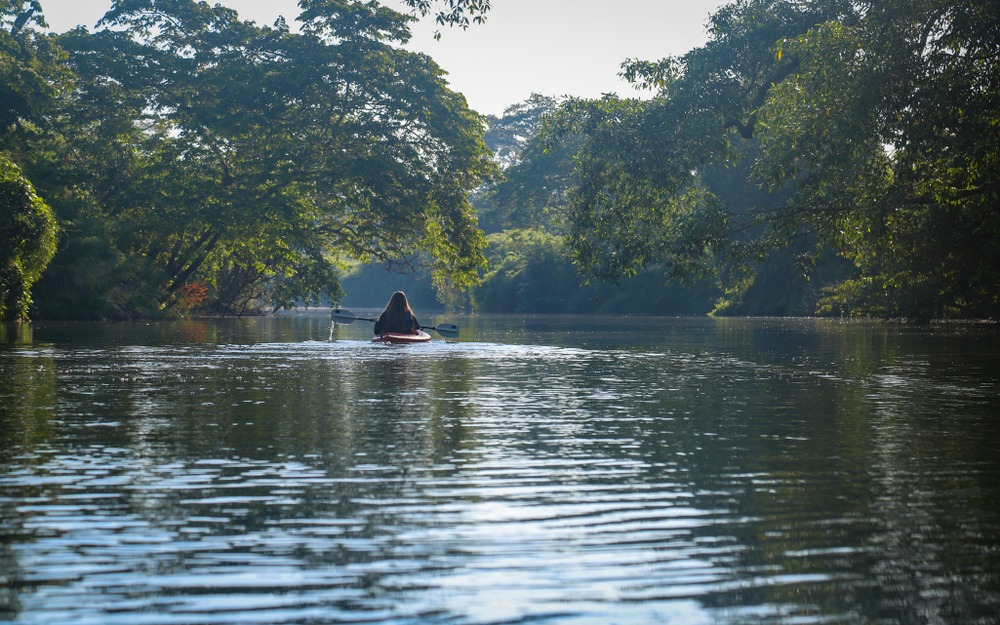
- A boat journey along the New River that adds a natural dimension to the visit: crocodiles, iguanas and water birds are often spotted from the vessel.
Unlike other more cleared Mayan sites, Lamanai retains a forest setting that offers a landscape view close to what the first archaeologists experienced.
History of the site
The first occupation of Lamanai dates back to 1500 BCE. The city was inhabited without interruption for approximately 3,200 years, making it the only known Mesoamerican site to have lasted so long. It was only abandoned after the arrival of the Spanish, around the 17th century.
The name is one of the few to have been preserved in its original Maya form. The first Franciscan missionaries who arrived on the scene recorded the encrypted inscription "Lama'an'ain," passed down by the inhabitants. Several crocodile effigies carved into the structures confirm this toponymic link.
Systematic excavations began only in the 1970s. They revealed an active trading city, connected with other centers in the region. Research continues today, and new areas are still being uncovered.
What to see on site
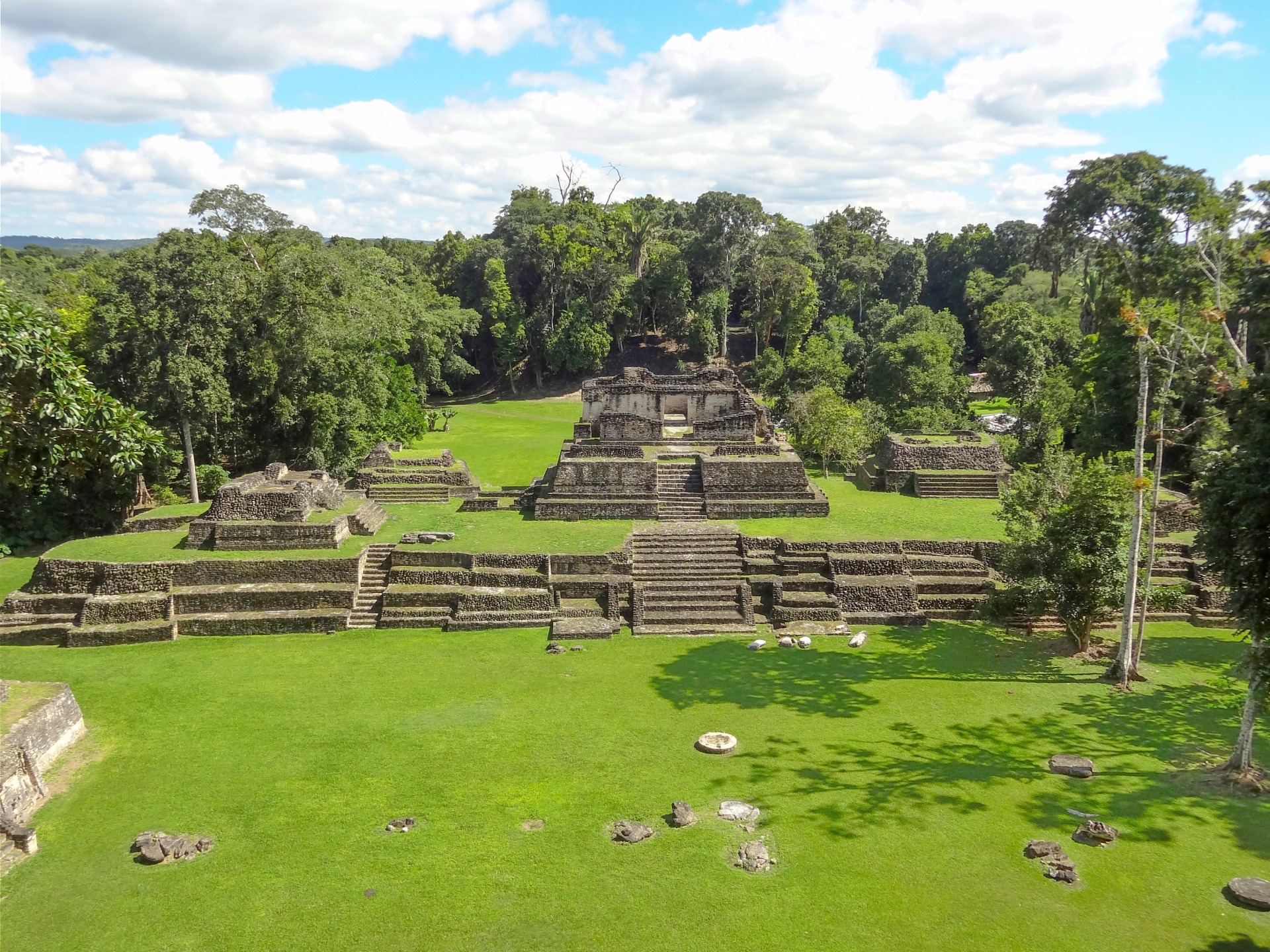
The site is organized around several temples and ceremonial plazas, connected by forest trails. Plan for half a day to tour the main areas at a comfortable pace.
The High Temple
The High Temple stands 33 meters tall and ranks among the highest Mayan structures in Belize. The climb up a steep staircase offers a clear view over the canopy and the New River lagoon. This is typically the most striking viewpoint of the visit.
The Mask Temple
This temple gets its name from a stone mask approximately 4 meters (13 feet) carved on its façade, depicting the face of an ancient Mayan king. The structure stands 4.2 meters high and displays a distinctive construction technique: limestone blocks assembled and covered with a lime coating and stucco layer.
The Jaguar Mask Temple
Part of this building remains covered by vegetation. Its visible height is less than the High Temple, but the dimensions beneath the forest cover could be greater. The name comes from jaguar masks that decorate the walls on either side. Local legend speaks of an ancient spear hidden within the structure, called the "jaguar's heart."
The site museum
A small museum displays artifacts uncovered during excavations: copper bells, ornaments, axes and ritual objects. It provides helpful context for understanding the city's economic organization and its role in regional trade.
Practical information
The site is open daily during daytime hours. Admission is modest, with separate rates for Belizean residents and foreign visitors; access is free for Belizeans on Sundays and public holidays.
Bring sturdy hiking shoes, water, insect repellent and sun protection. The trails are partly shaded but humidity remains high year-round.
When to go
Belize has two main seasons. The dry season, from late November to May, is significantly more comfortable for visiting Lamanai: access roads are passable, site trails less muddy and boat trips more pleasant. The wet season, from June to November, makes the jungle denser and more active wildlife-wise, but rainfall can complicate land access. Early morning departures are recommended year-round for cooler temperatures and better opportunities to observe wildlife along the New River.
How to get there
Two options are available from Orange Walk Town, the usual starting point.
Boat-taxi via the New River
This is the most common approach. Boats typically depart from Tower Hill bridge near Orange Walk and travel upriver to the site. The journey allows you to spot crocodiles, iguanas and water birds on the riverbanks. Allow approximately an hour and a half of travel time each way.
By vehicle on the dirt road
An unpaved road connects Orange Walk to the village of Indian Church, which adjoins the site. The journey of approximately 45 km passes through several villages including Shipyard and San Felipe. A high-clearance vehicle is recommended, especially during the wet season.
Nearby attractions
To further explore Mayan sites and natural areas in Belize, several destinations complement a visit to Lamanai:
- The Caracol Mayan ruins, the country's largest archaeological site.
- The Yaxha archaeological site, near the Guatemalan border.
- The Mountain Pine Ridge Forest Reserve, known for its pine forests and waterfalls.
- The Bacalar Chico National Park, on the Caribbean coast.
Frequently asked questions
Frequently asked questions
Plan for 2 to 3 hours on the site itself to tour the main temples and museum. Combined with the boat journey to and from Orange Walk, the full excursion takes up an entire day.
Lamanai means "submerged crocodile" in Yucatec Maya. The name is one of the few preserved in its original form, recorded as "Lama'an'ain" by the first Franciscan missionaries.
The New River boat option is the most popular as it adds a natural dimension to the visit. The overland route is faster but the road can be difficult during the wet season.
Yes, crocodiles are regularly spotted along the New River during the boat journey. On the site itself, visible wildlife consists mainly of birds, howler monkeys and iguanas.
The dry season, from late November to May, offers the best conditions: passable roads, dry trails and comfortable visiting. The wet season is still possible but requires more preparation.
Planning your trip
Lamanai fits easily into an itinerary combining Mayan sites and nature in northern and central Belize. To build a tailor-made trip, explore our Belize travel ideas.
Interested in this visit?
We can include it in your personalised itinerary.